
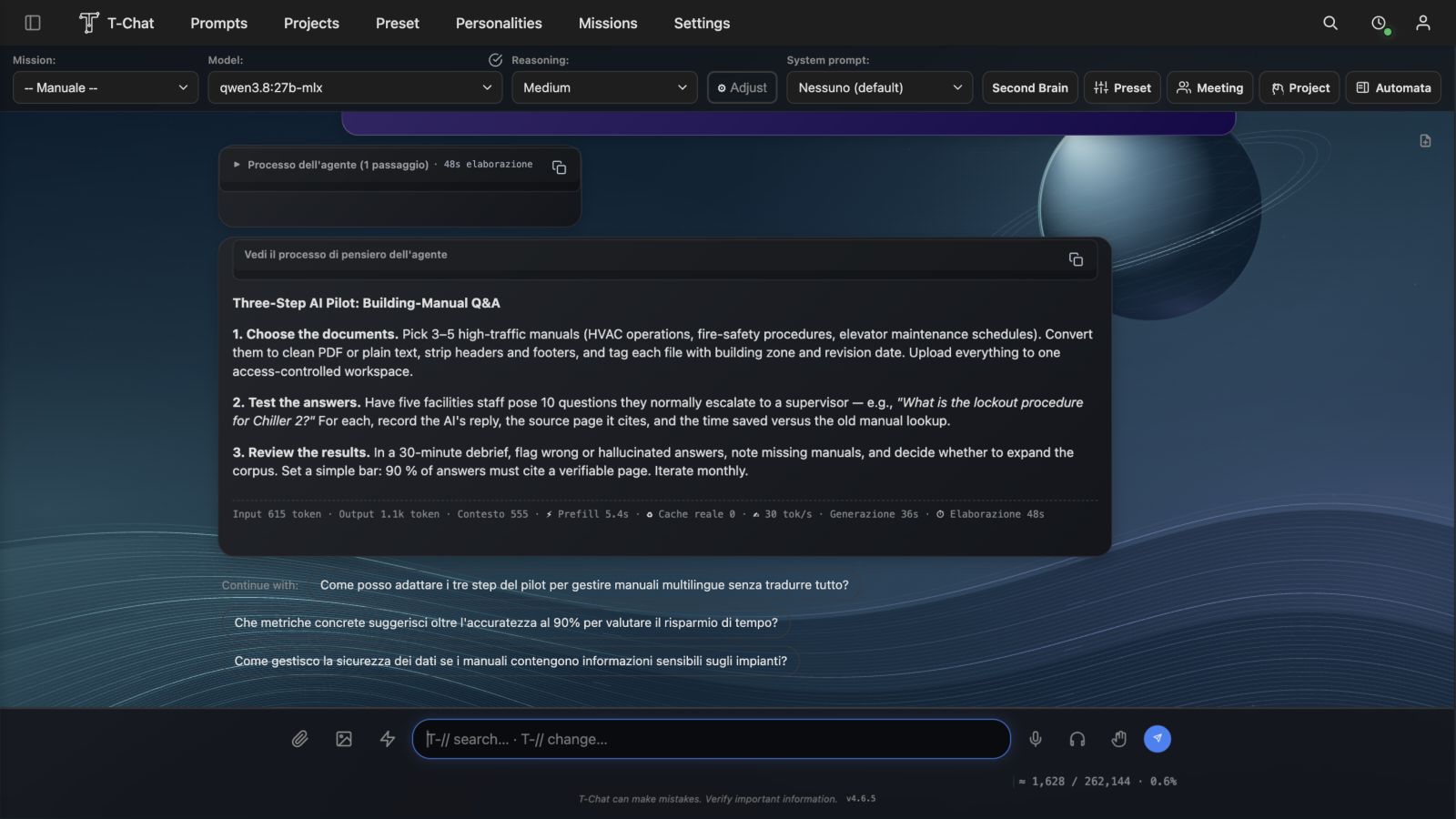
T-Chat 4.6.5 builds on the 4.6 series: current knowledge in conversations, local applications and more precise control over file operations. For businesses and institutions, the practical goal is to connect conversations with sources and deliverables that people can check.
Second Brain: current sources in existing chats
Context refreshes when Second Brain documents change, including when resuming an existing conversation. Markdown files are supported, and sources available through connected Office accounts can be selected and imported through the supported workflow. This is not automatic synchronisation of every account.
During work, the model can propose new information for the collection. Adding it requires confirmation: the owner decides what becomes reusable knowledge.
Workspace: verified writes and a synchronised editor
Version 4.6.5 verifies file writes and distinguishes an actual edit from an operation that leaves the content unchanged. After saving, Workspace can refresh the view while protecting the user’s unsaved edits. Technical verification of a save does not certify the quality of generated text or code; review remains necessary.
Folders, renaming and customisation help organise files and the desktop. The local application workflow includes Python projects and databases, using local models or APIs when configured. Dependencies, access and generated application behaviour need verification before operational use.
Memory adapts to the machine and to meetings
Resource management considers available memory and workload. During multi-agent meetings it coordinates heavy local models, without assuming that every model should stay loaded at the same time. Agents can retain distinct roles while inference runs sequentially.
This approach is not tied to one RAM capacity. It does not promise identical speed on every machine: model size, context, runtime and other applications still affect performance and need measurement.
Companion: clearer downloads and model control
Companion shows Hugging Face download status, transferred data amounts and percentages when the total is available. The workflow includes model configuration, removal and actionable error details. Fixes in the 4.6 series also cover parameters for supported models and character handling in responses.
Time, automations and optional Me mode
T-Chat includes time in its operational context. The optional Me mode can use memory and initiative according to enabled settings. Anima respects project scope, and automations retain management controls. These capabilities need configuration aligned with the team’s responsibilities.
The current edition remains for Mac Apple Silicon. For business adoption, the most useful demonstration uses a real task, authorised documents, the intended hardware and agreed evaluation criteria.